

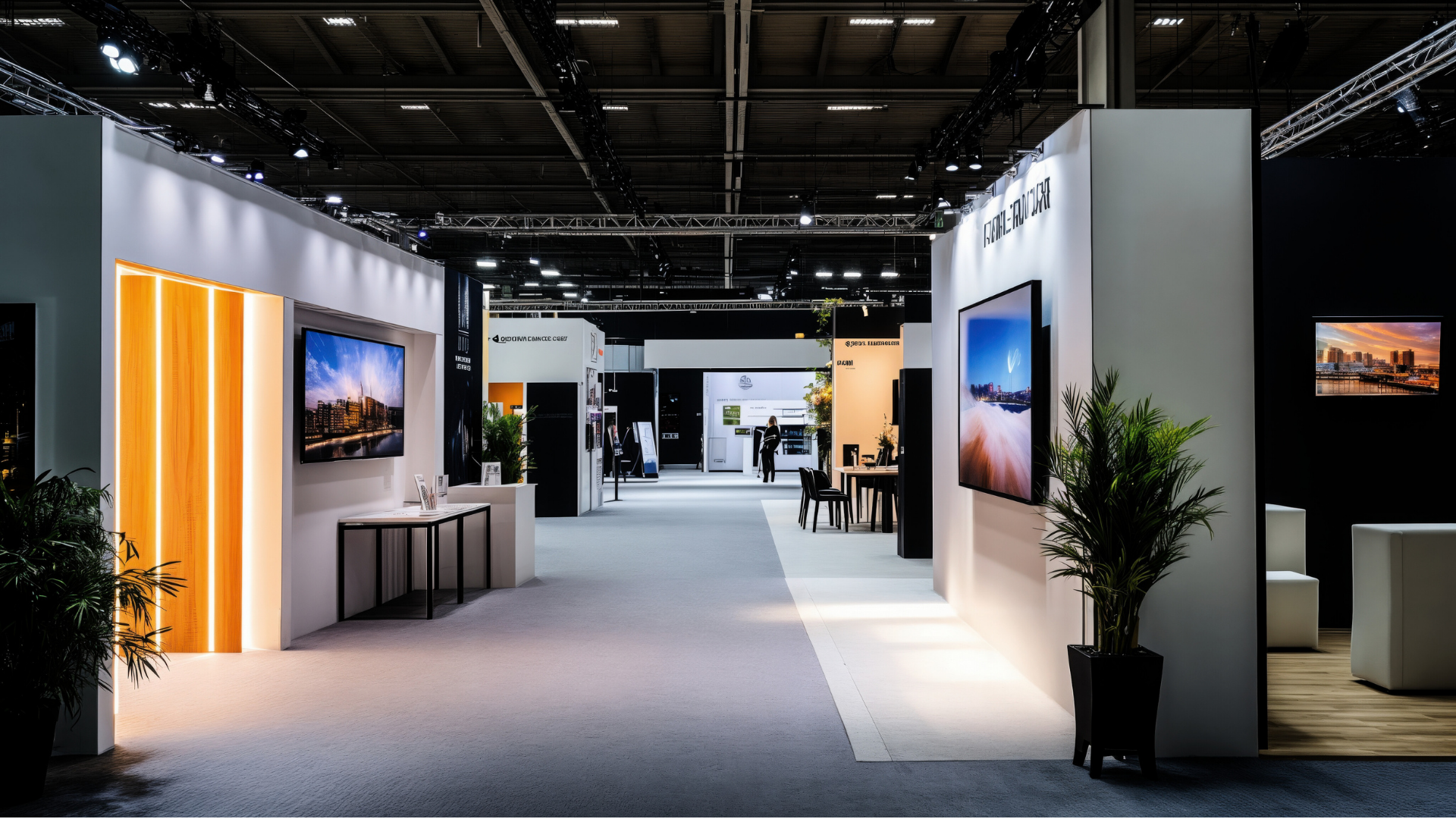
Summary: Floor fixing during events and trade shows may seem simple, but it often leads to more subsequent costs than most anticipate. This guide covers the most common mistakes – wrong tape for sensitive surfaces, tape left on too long, and floor surfaces shifting under traffic – and how to avoid them with the right product choices and simple routines.
It often happens after the event, not during. The trade show is over, the booth is dismantled, and the venue needs to be returned. Then you notice that the tape along the edge of the carpet has left clear adhesive residue on the polished floor. Or that a corner of the stage floor pulled off some varnish when the tape was removed. Or that double-sided tape left on for three days requires chemical treatment to remove, and the venue sends an invoice for it.
None of this is dramatic in the moment. But summed up over a season of productions, it represents time, money, and sometimes relationships with venues that could have been preserved with better material choices from the start.
Floor fixing mistakes are almost always predictable. The wrong adhesive type for the wrong surface. Tape left on longer than planned because dismantling was postponed. Formats that are undersized for the load. None of this is bad luck – it's the consequence of decisions made under time pressure without sufficient information. The necessary information is not technically complicated, and having it available during the planning phase distinguishes productions that leave the venue clean from those that leave it with a problem.
Wrong tape for sensitive surfaces – when the adhesive does more harm than good
The most common source of compensation claims in event production is not cables or heavy rigging elements – it's tape on floors. Specifically: tape chosen without considering the surface's sensitivity, which, upon removal, leaves residue, lifts lacquer layers, or alters the surface's sheen.
Polished floors in theatres, cultural centers, and reception areas are most sensitive. The surface appears hard but reacts strongly to aggressive adhesive formulations, especially with longer exposure times. A tape with standard rubber adhesive left on for 72 hours on a lacquered wooden floor activates the adhesive deeper into the surface than initially visible, and removal will either leave visible residue or alter the surface finish along the entire tape line.
tesa 4939 is designed to prevent this scenario. The product's differentiated adhesion provides a stronger bond to what is being taped down – for example, a runner or a floor element – and a gentle profile against the substrate. Use tesa 4939 to fix runners and temporary floor elements to sensitive surfaces in rented venues. Always pull the tape up at a sharp angle against the surface when removing it, never straight upwards – this removal technique is crucial for the result, regardless of the product used.
Nichiban 50mm x 25m is the alternative for the most sensitive surfaces – theatre floors, lacquered parquet, and reception areas with specific requirements. Nichiban is known in the production industry for leaving minimal residue with correct removal and is used by teams that regularly work in environments where the venue does not tolerate residue. Use Nichiban for floor markings and edge taping along stage floors in rented venues where residue is an unacceptable outcome.
A concrete routine that prevents post-event discussions: contact the venue and ask what tape material is approved for their floor surface. Most professional venues have an answer to this question. It takes three minutes and replaces all guesswork about which material can handle the surface.
Exposure time – the hidden factor that drives up costs
There is an assumption in many production teams that a tape either works or doesn't work on a surface. In reality, it's more nuanced: the product might work with 24 hours of exposure but become problematic at 72 hours, because the adhesive continues to activate against the surface for the entire time it is on.
This factor causes the most surprises when dismantling multi-day trade shows. The tape was applied before day one and removed three days later. During those three days, the adhesive contact with the surface changed, and removal yielded a different result than the test done the day before opening.
tesa 4964 is one of the strongest double-sided tapes in the range and provides excellent adhesion for heavy floor elements and stage platforms. However, its strong adhesive formulation also means that exposure time plays a more prominent role. Use tesa 4964 for heavier fixing needs where you can plan removal within a reasonable time – not for installations that might be prolonged without you controlling the removal. For multi-day trade shows with uncertain dismantling schedules: choose tesa 4939 or Nichiban and compensate for any adhesion needs with more fixing points rather than a stronger tape.
tesa 4965 is a permanent double-sided tape – designed to stay on and not be removed. It is the right product for permanent installations and the wrong product for all temporary contexts. It sometimes happens that tesa 4965 ends up in the material box and is used during a trade show because people "use what's available," with the result that the booth cannot be dismantled without leaving marks. Keep permanent and temporary products in separate boxes.
A simple but effective rule: always note the surface and how long the tape will be on, and match it against the product's recommended exposure time. That information should be on the material list, not decided on-site.
Wrong format and insufficient coverage – when floor surfaces shift under traffic
A runner that begins to shift under visitor traffic is a multi-dimensional problem. It's a tripping hazard. It's aesthetically disruptive. And if it happens on a rented floor, the displaced mat can leave marks along the edge that suddenly finds itself in the wrong place.
The most common technical reason for floor fixing failure under traffic is not product quality – it's that the format was undersized for the task. A narrow strip of double-sided tape along the edge of a runner provides minimal contact area with the surface. Under the lateral forces of visitor traffic – visitors turning, stopping, pushing through – that contact area is insufficient.
Orafol 1450 is available in several formats and is designed with an adhesive that handles more texture in the substrate than the more gentle standard alternatives. Use Orafol 1450 in a wider format along runners and floor elements that need to withstand visitor traffic on uneven surfaces such as concrete and trade show cardboard. A wider contact area provides more lateral stability – a 50mm layer along the entire length of the edge holds significantly better than three points of 25mm tape with gaps in between.
A rule of thumb for floor mats with visitor traffic: tape along the entire length of the edges that are subjected to lateral force, not just at the corners. The corners may seem like the critical points, but lateral forces act along the entire edge during a fully attended event.
The test routine that prevents most costly mistakes
Almost all floor fixing-related compensation claims and re-work could have been prevented with a simple test conducted at the right time.
The test routine takes fifteen minutes. Place a piece of the planned tape in an inconspicuous corner of the actual surface. Let it sit for exactly the time it is planned to sit during the event – if the fair is three days, let the test piece sit for three days. Then remove it in exactly the same way you plan to remove the rest, at a sharp angle and with even force. This provides a direct answer as to whether the product works on that specific surface for that specific exposure time.
The test reveals three things that cannot be determined in advance without it: whether the adhesive leaves residue upon removal, whether the surface reacts with discoloration or surface damage, and whether the tape actually holds for the planned exposure time. All three are valuable information in the planning phase and useless if discovered during dismantling.
Use tesa 4939 as the standard option for most sensitive floor surfaces and test it against the actual surface during the first production in each new venue. Document the results: product, surface, exposure time, result upon removal. Three to four such notes build up your own reference library that removes guesswork from every subsequent production in the same venue – and directly reduces the risk of costly mistakes.
FAQ
1. Which double-sided tape is safest for sensitive floors in rented venues?
Nichiban 50mm x 25m is the first choice in the most sensitive environments – theaters, cultural centers, and reception areas with polished floors or lacquered wood. Nichiban has a balanced adhesive that provides sufficient adhesion for most markings and edge taping, and leaves minimal residue with correct removal at a sharp angle to the surface. tesa 4939 is the alternative for standard exhibition floors and slightly more robust surfaces. Always contact the venue and ask what material they approve for their floors – it eliminates all guesswork and provides a clear answer to document in the material list.
2. How long can tesa 4939 stay on an exhibition floor without leaving residue?
tesa 4939 typically withstands 24–48 hours on standard exhibition floors without leaving visible residue with correct removal. For longer exposure times, the risk of the adhesive activating deeper into the surface increases. For multi-day exhibitions: conduct a test on an inconspicuous corner of the floor with the exact planned exposure time and removal technique. This will provide a concrete answer on how the product behaves on that specific surface. Always pull the tape up at a sharp angle to the surface, not straight upwards – the removal technique is as important as the product choice to avoid residue.
3. What is the difference between tesa 4939, tesa 4964, and Nichiban for floor fixing?
Three distinctly different profiles. tesa 4939 has differentiated adhesion – stronger to what is being affixed, gentle to the substrate – and suits sensitive surfaces with short to medium exposure times. tesa 4964 provides stronger adhesion and suits heavier floor elements under intense traffic, but requires more control over exposure time on sensitive surfaces. Nichiban is primarily chosen for its clean removal profile in environments with strict floor requirements. Choose based on surface sensitivity, traffic load, and planned exposure time – not primarily on price.
4. What should you do if the tape has left residue on a rented floor?
Inform the venue immediately and document the situation with photos. Do not attempt to remove the residue with solvents without asking the venue – the wrong solvent can worsen the damage. The venue typically has a protocol for adhesive residue and prefers to handle it with the correct method. Prevent it next time with Nichiban for markings on sensitive surfaces and tesa 4939 for floor fixing, and always perform a test layer on an inconspicuous corner during the first production in the venue.
5. How do you fix heavier floor elements that need to withstand intense visitor traffic?
tesa 4964 provides the strongest adhesion in the range for this task. Apply along the entire length of the edges that are subjected to lateral force, not just at the corners. The corners may seem like the critical points, but lateral forces act along the entire edge during a fully attended event. Test the product on the actual surface before the exhibition opens and note how long it is planned to remain. For longer exposure times on sensitive surfaces: choose Orafol 1450 as a balanced alternative with stronger adhesion than tesa 4939 but a gentle removal profile.
6. Can permanent double-sided tape be used for temporary installations?
No. tesa 4965 is specifically designed for permanent mounting and should not appear on the material list for temporary event installations. The problem is that it stays on regardless of exposure time and requires aggressive removal – exactly what damages sensitive floors. Keep permanent and temporary products in separate storage boxes with clear labeling. If you are unsure whether a tape is permanent or temporary: test removal with low force after a short time. Permanent tape will offer strong resistance.
7. What happens if Orafol 1450 is used on a sensitive lacquered wooden floor?
Orafol 1450 has a more aggressive adhesive designed for robust surfaces such as concrete and exhibition carpet. On varnished wood, it may leave residue or affect the surface's sheen with prolonged exposure. For delicate surfaces: choose Nichiban or tesa 4939 and always test on the surface before taping the entire area. Orafol 1450 is the right product in the right place – on concrete and exhibition carpet with visitor traffic, it's an excellent choice. On polished wood, it can be costly.
8. How do you document tests to avoid repeating them for each production?
Create a simple document for each venue: venue name, flooring material, tape product tested, exposure time, removal technique, and results. Feel free to photograph the removal results. Save the documents per venue and make them accessible to the entire team. For the next production in the same venue, anyone on the team can see what material worked and what didn't – without having to re-do the test. This information accumulates quickly and removes a large part of the guesswork from floor-fixing decisions. It is one of the cheapest insurances against recurring claims for compensation.
Share article:
How Stage Tape Contributes to a Safe Audience Environment (2026)
Water-resistant tape – when it's a must (2026)