

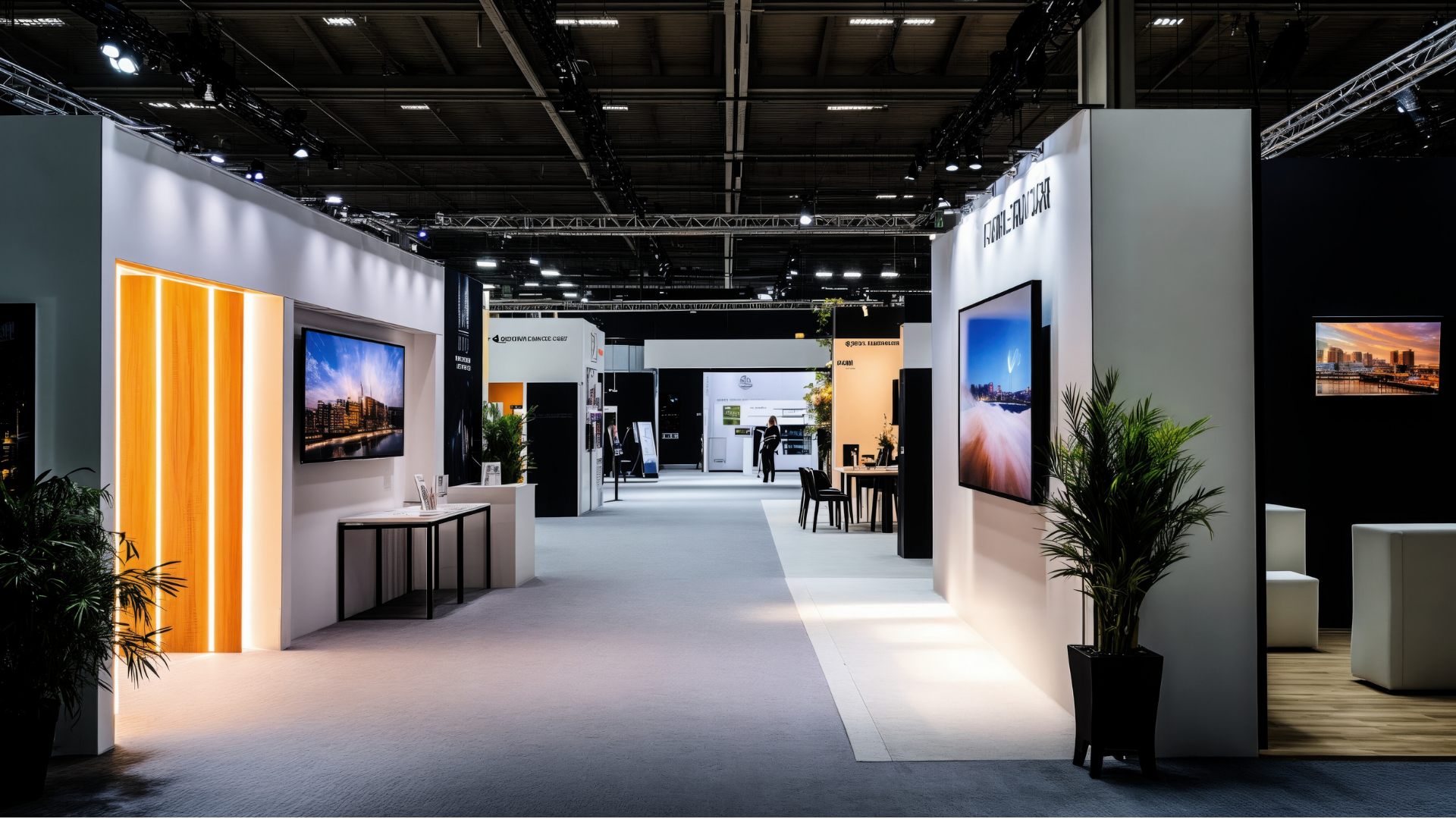
Summary: This article is about which tape actually makes an installation look professional rather than haphazard – without reflections, visible edges, or shiny surfaces that draw the eye the wrong way. It is written for production managers and technicians responsible for stage designs, exhibition stands, and installations where the visual impression is as important as the function. The reader gets concrete choices for reflection-free fastening, invisible mounting, and floor solutions that blend into the whole rather than appearing as an afterthought.
It's a detail that determines whether an installation looks professional or not: a glossy tape edge that catches the light, a gaffer tape that glimmers under spotlights, or a floor fixing that is clearly visible at the edge of an otherwise clean surface. Visually clean installations are about every material holding the whole together blending into it at the same time, so that the visitor or audience only sees the result – not how it's attached. We often see production teams focus all attention on what is actually visible, such as signage and set design, while the fastening material is chosen more routinely. The problem is that the wrong tape is just as visible as the wrong sign, only in a way that disturbs rather than communicates. In this article, we go through four situations where the right tape choice is the difference between an installation that looks well-thought-out and one that reveals its own attachment points.
Reflections that disturb an otherwise well-designed stage image
A shiny or glossy gaffer tape reflects light in a way that draws the visitor's or audience's attention to the wrong place, especially under directed lighting where every glimmering surface stands out. This comes up in almost every production with concentrated stage lighting – the tape that was supposed to be invisible instead becomes the first thing you notice. Use tesa 53949 for all visible fastening where reflections would disturb the overall impression, as its completely reflection-free, matte surface is specifically developed for stage and event environments with demanding lighting. We often see technicians discover the problem only during a full lighting rehearsal, when it is already too late to change materials without disturbing the rehearsal. In practice: apply tesa 53949 already during the first rigging session and test how it behaves under actual lighting before the entire installation is complete, so that any adjustments can be made in time.
Signs and materials that should appear to float
Visible fastenings – whether screws or a clear double-sided tape – signal that the solution is temporary, even if the rest of the installation is carefully thought out. You can solve this with Orafol 1397 PP, as its transparent PET carrier makes the mounting almost invisible against most surfaces, while the adhesive strength holds throughout the production period. We often see signs and displays mounted with visible tape out of habit, even though a transparent solution gives a significantly cleaner result at approximately the same cost and time. In practice: make sure the surface is clean, dry, and grease-free before applying Orafol 1397 PP, as even small traces of dust or grease noticeably impair both adhesion and the final visual result.
Floor surfaces where every visible edge disturbs the overall impression
Carpets, walkways, and floor decals should often be perceived as an integral part of the floor, not as something attached afterwards with a clearly visible tape edge. This is particularly noticeable in lounge areas and exhibition stands where visitors move close to the floor and their gaze naturally falls there. Use tesa 4939 to fix carpets and floor materials, as the transparent tape provides a clean, invisible edge while the differentiated adhesion keeps the material stable throughout the event and can be removed without adhesive residue within 14 days. We often see productions choose a regular, opaque floor tape out of old habit, even though a transparent solution is both less visible and leaves the floor in better condition afterwards. In practice: apply tesa 4939 to a clean and dust-free floor and press the material firmly along the entire tape line, so that the adhesion is even and the edge does not visibly lift anywhere.
Backgrounds and surfaces that should maintain a uniform, matte appearance
A stage background or surface that is intended to give a cohesive, matte impression is easily ruined by a single shiny or incorrectly colored piece of tape that breaks the pattern, especially during photography or filming where every imperfection is clearly visible. Use Le Mark MagTape® Matt 500 for fastening and repairs on surfaces that should maintain a uniform, non-reflective appearance, as the matte black surface is an industry standard for visible fastening in stage and production environments. You can solve this particularly well with Le Mark MagTape® Matt 500 in productions that are photographed or filmed, where a shiny piece of tape would otherwise be clearly visible even in pictures taken from a distance. In practice: use Le Mark MagTape® Matt 500 in the color that best matches the background – the product is available in several shades – rather than compensating for the wrong color with extra layers that only make the problem more visible.
Frequently Asked Questions
How do I prevent gaffer tape from reflecting under stage lighting?
Choose a matte, non-reflective tape instead of a standard gaffer tape with a shiny surface. Use tesa 53949 for visible fastening on stage and always test under actual lighting before the installation is complete, as reflections can look different depending on the angle and light intensity. Adjust the placement if something reflects unexpectedly, rather than discovering the problem only during a performance.
Which tape makes a sign appear to float without visible fastenings?
A transparent mounting tape with strong acrylic adhesive is the right choice for most sign and display mountings. Use Orafol 1397 PP on clean, dry, and grease-free surfaces, and test on a small area of the material before mounting the entire sign. This provides a result where the fastening is practically invisible to the visitor.
How do I fasten a carpet without a visible edge ruining the overall impression of the floor?
Use a transparent floor tape rather than a regular, opaque variant. Use tesa 4939 and apply to a clean, dust-free floor with even pressure along the entire tape line. Check the edges afterwards to ensure that no part of the tape is visible or lifting from the floor surface.
Can I remove transparent floor tape without damaging the substrate afterwards?
Yes, provided you choose a product specifically designed for it. Use tesa 4939, as it is tested for residue-free removal within 14 days. Test on an inconspicuous part of the floor in advance if you are unsure about the material, especially in premises you only rent temporarily.
Why is a single incorrect piece of tape so visible on an otherwise matte background?
Even a small deviation in gloss or color breaks the uniform impression, especially during photography or filming where contrasts are amplified. Use Le Mark MagTape® Matt 500 consistently in the same shade as the background to avoid visible deviations. Check the result through the camera or from the audience's perspective before the installation is considered complete.
Does transparent mounting tape work on uneven or structured surfaces?
It depends on the material, but Orafol 1397 PP works well on most smooth or lightly structured metal, glass, and plastic surfaces. Always test on a representative part of the surface before carrying out the entire installation, especially if the structure varies. If the surface is very uneven, a tape with a higher adhesive coating weight may be needed instead.
How do I ensure that the entire installation has a uniform, clean appearance?
Standardize which tape is used for each purpose – reflection-free fastening, transparent mounting, and floor fixing – before the installation begins, so that different technicians do not choose different solutions for the same type of need. Use tesa 53949, Orafol 1397 PP, and tesa 4939 as a basic package for each category. Document the choice in the production plan so that the result is uniform regardless of who performs the mounting.
Is visually clean tape always more expensive than standard alternatives?
Often yes, but the price difference is usually small in relation to how much the visual impression is improved. Use tesa 53949 and Orafol 1397 PP where visibility actually matters, and save standard tape for tasks that are not visible in the final result, such as internal cable fixing behind the scenes or walls.
Share article:
Right tape for attaching backdrops and decor 2026
Electrical Tape vs. Stage and Cable Tape – The Differences You Need to Know 2026