

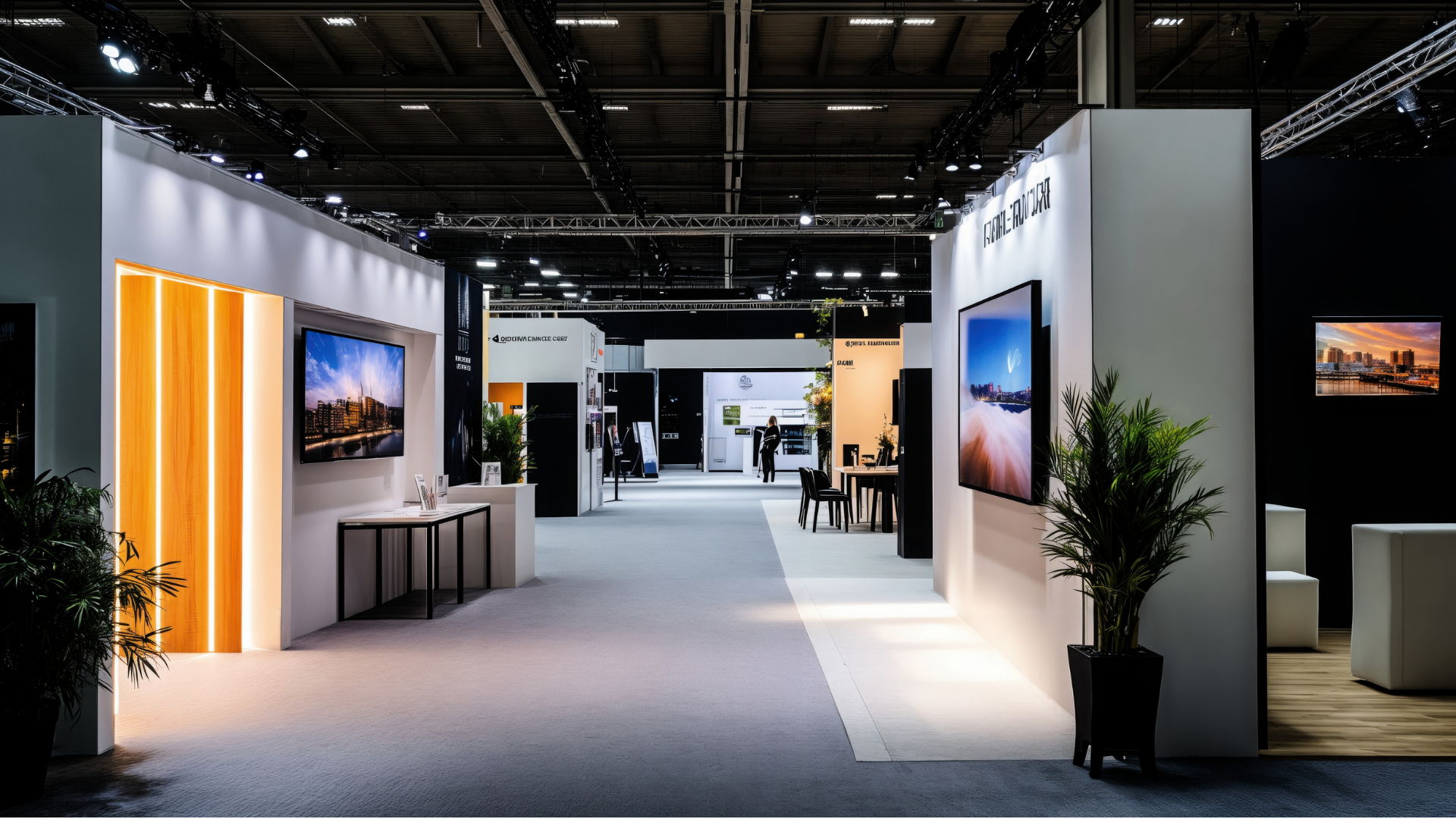
Summary: This article is about which transparent tape actually delivers on its promise when the installation needs to be visible – but the fixings should not be. It is written for production managers and technicians who install signs, displays, and flooring where every visible screw or glue edge disrupts the overall impression. The reader will get concrete choices for permanent mounting, temporary floor fixing, and heavier elements, as well as what distinguishes a truly transparent tape from one that is merely "almost invisible."
It's a recurring discussion in installation briefs: the client wants the sign mounted without visible screws, the display should appear to float against the wall, and the flooring should stay put without any tape edge showing. Discreet installations are about the solution not competing with what it's holding in place. We often see production managers resorting to screws or visible double-sided tape because they are unaware of which transparent alternatives actually hold up over time, especially in environments with heat, moisture, or heavy materials. Transparent tape for discreet installations is not a single product – it's a set of solutions depending on whether the installation is permanent or temporary, and whether the substrate is glass, metal, textile, or something else entirely. In this article, we'll go through four situations where the right transparent tape makes all the difference between a professional-looking installation and one that reveals itself upon closer inspection.
Signs and displays without visible fixings
Mounting a sign or display on a wall, cabinet, or profile without visible screw holes is one of the most common requests in an installation brief, especially when the underlying material is delicate or cannot be drilled into. The wrong solution here is immediately obvious – either through a yellowish glue edge or by the sign slipping out of place after a few days. Use Orafol 1397 PP for permanent mounting of signs, profiles, and displays, as its transparent PET carrier and strong acrylic adhesive adhere discreetly to metal, glass, painted surfaces, and most plastics without being visible against the substrate. We often see technicians choose screws out of habit even when tape would have sufficed, unnecessarily creating visible holes that later need to be hidden or repaired. In practice: ensure the surface is clean, dry, and grease-free before applying Orafol 1397 PP, as even small traces of dust or grease will impair adhesion on otherwise perfectly suitable materials.
Permanent mounting in demanding environments – metal, glass, and plastic
Some installations are exposed to significantly tougher conditions than a typical exhibition wall – outdoor signs, materials near light fixtures, or displays in premises with large temperature fluctuations. A transparent tape that works at room temperature is not always sufficient in these cases. You can solve this with tesa 4965, as its transparent PET film and modified acrylic adhesive can withstand short-term heat up to 200°C and long-term stress up to 100°C, while maintaining discreet adhesion on metal, glass, and plastic. We often see this type of installation misjudged at the planning stage, causing the adhesive to fail after a few weeks in a warm room or near lighting that emits more heat than expected. In practice: choose tesa 4965 in 25 mm width for larger areas requiring extra holding power, and always test on the actual material before scaling up the installation to a full production.
Temporary carpet laying that shouldn't be visible
Carpets and walkways at trade fairs and events often need to look like an integral part of the floor, not something that was attached afterwards with visible tape along the edges. This is especially important in lounge areas and stands where visitors move close to the floor and a visible tape edge draws the eye in the wrong way. Use tesa 4939 to fix wall-to-wall carpets and runners, as the transparent, almost invisible tape provides a clean result while its differentiated adhesion holds the carpet securely but can be removed without adhesive residue within 14 days. We often see productions choose a standard, opaque floor tape out of old habit, even though a transparent solution is both less visible and leaves the floor in better condition afterwards. In practice: apply tesa 4939 to a clean and dust-free floor and press the carpet firmly along the entire tape line, so that the adhesion is even across the entire surface instead of only holding at the points where pressure was greatest.
Heavy elements requiring extra holding power without being visible
A backdrop, a heavier screen, or a decorative element that needs to hang or be fixed without visible fasteners is another common challenge – here, a lighter transparent tape is not always sufficient, while screws or visible fasteners are not an option if the overall impression is to remain clean. Use tesa 4964 for fixing heavier backdrops, screens, and structural elements, as it combines exceptional holding power with an almost invisible fixation that does not disturb the visual presentation. You can solve this particularly well with tesa 4964 on slightly uneven surfaces such as textured floors, fabric, and painted materials, where the high adhesive coating weight provides adhesion even where a thinner tape would have failed. In practice: always test tesa 4964 on delicate surfaces such as newly varnished parquet flooring or polished marble before full application, and remove the tape shortly after use for best results if the installation is only temporary.
Frequently Asked Questions
What is the actual difference between transparent tape and "invisible" tape?
Transparent tape has a clear carrier material that allows the substrate to show through, while "invisible" sometimes just describes how discreet the fixing appears in practice, without the material necessarily being transparent. Use Orafol 1397 PP or tesa 4965 when the actual requirement is transparency, for example when mounting on glass. Always check the product specification specifically for "transparent" if it is a strict requirement in the brief, not just assumptions based on the product name.
Which tape works best for permanently mounting a sign without visible screws?
A transparent, permanent mounting tape with a strong acrylic adhesive is the right choice for most sign and display mountings. Use Orafol 1397 PP on clean, dry, and grease-free surfaces of metal, glass, or most plastics. Always test on a small area of the actual material before mounting the entire sign, especially if the substrate is unknown or has an unusual surface treatment.
Does transparent tape hold up in high-heat environments, like near stage lighting?
Yes, provided you choose a tape specifically designed for it. Use tesa 4965 as it can withstand short-term heat up to 200°C and long-term stress up to 100°C without losing adhesion. Position the installation with some margin from the most intense heat source if possible, and test the adhesion under actual conditions before scaling up production.
Can I use the same t
ransparent tape for floors as for wall mounting?
No, floor and wall mounting have different requirements for adhesion and removal. Use tesa 4939 specifically for temporary carpet laying on floors, as it is designed to be removed without adhesive residue within 14 days. Save Orafol 1397 PP or tesa 4965 for permanent mounting on walls, signs, and displays where durability requirements are different.
How do I make a heavier backdrop stay in place without visible fixings?
A heavier backdrop requires a double-sided tape with a high adhesive coating weight to provide sufficient holding power without being visible. Use tesa 4964 and always test on the actual material first, especially if the surface is delicate like newly varnished wood or polished stone. Distribute the attachment points evenly across the entire width of the backdrop instead of concentrating them in the middle, reducing the risk of the edges coming loose over time.
Does transparent tape leave adhesive residue when removed?
It depends on which product you choose and how long it has been in place. Use tesa 4939 if residue-free removal within a specific timeframe is a requirement, as it is specifically tested for that within 14 days. Permanent solutions like tesa 4965, however, are not intended to be removed without traces, as they are designed for long-term, strong fixation rather than easy removal.
Does transparent tape work on uneven or textured surfaces?
Yes, but the result depends on how much adhesive the tape is coated with. Use tesa 4964 for slightly uneven surfaces such as textured floors or fabric, as its high adhesive coating weight provides better adhesion than a thinner tape on the same substrate. Always test on a representative part of the surface before the entire installation is carried out, especially if the texture varies across the surface.
How do I choose the right width for transparent mounting tape?
The width determines the amount of holding power and coverage the adhesive provides, which should be matched to the weight and size of what is being mounted. Use narrower widths like 9 mm for precision work and edge fixings, and wider options like 25 mm when tesa 4965 or Orafol 1397 PP needs to support heavier or larger materials. If in doubt, test both widths on the actual material before deciding on the entire installation.
Share article:
Smart tape solutions for pop-up shops and roadshows 2026
Why Stage Productions Always Have Tape in Reserve 2026